Your Ad Here
Reach thousands of racquet sports enthusiasts
Pro Tennis Racquet Changes: Why So Many Players Are Switching Gear in 2026


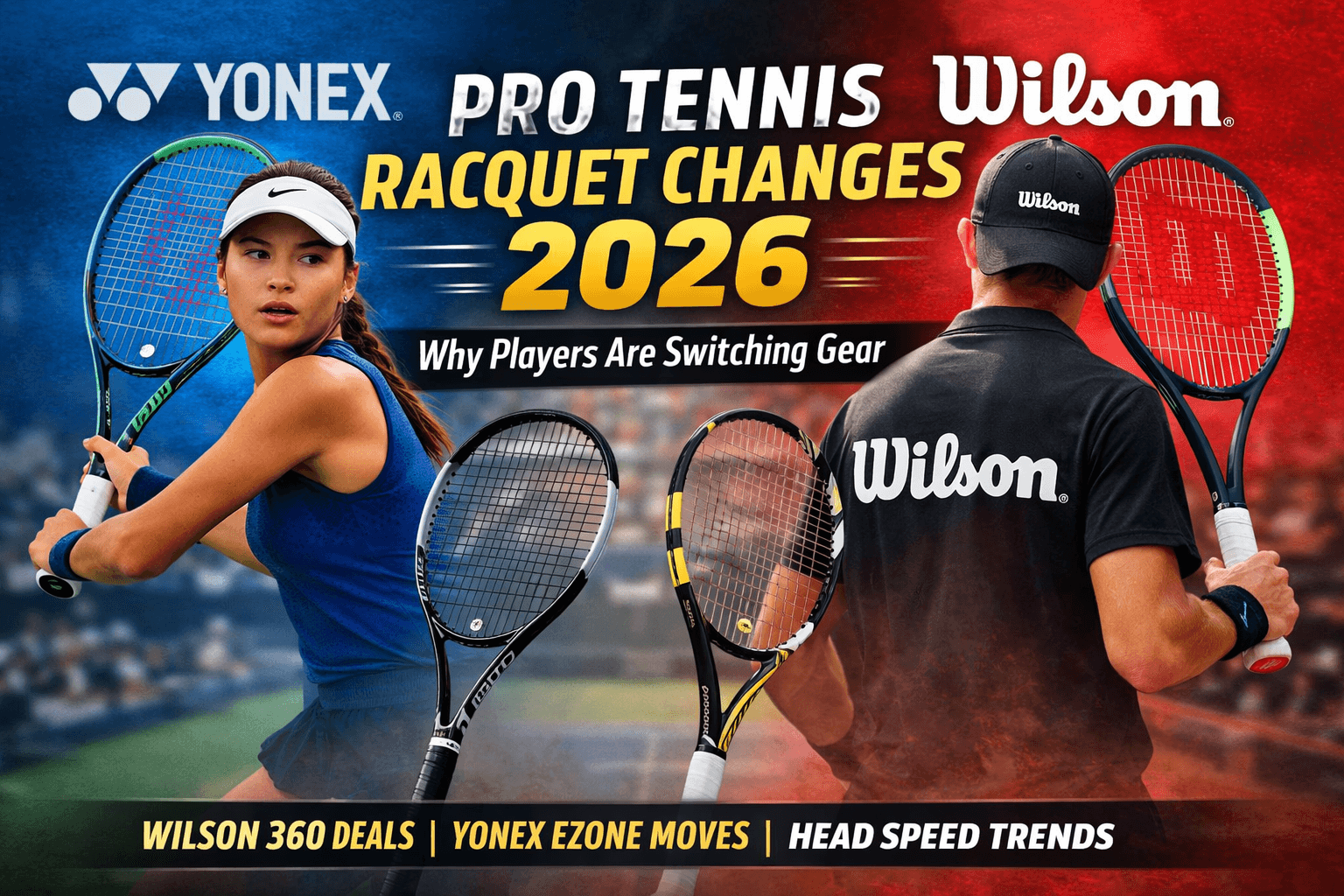
Pro Tennis Racquet Changes: Why So Many Players Are Switching Gear in 2026
If you’ve been watching matches lately and thinking, “Wait… that racquet looks different” — you’re not imagining it. The 2026 season is already shaping up to be a gear shuffle: racquet molds, cosmetics, sponsorship deals, and full head-to-toe contracts are changing fast.
And here’s the part most recreational players miss: these switches aren’t just “pro drama.” They tell you what the modern game is demanding — and what might actually help you play better at your level.
What’s driving the 2026 racquet shake-up?
In plain terms, a few forces are colliding at once:
Players want more forgiveness (bigger sweet spots, easier depth, less punishment on off-center hits).
Brands want tighter contracts (not just racquets — shoes and apparel too).
Results decide everything (a racquet change can boost confidence… or derail timing).
Modern tennis is brutal (heavier balls, faster courts, more baseline violence).
The trend is clear: a lot of pros are moving away from ultra-demanding “control-only” setups toward frames that give them a little more free power and margin. And honestly? That’s a lesson most weekend players in Montreal (and across Canada) can use immediately.
Emma Raducanu’s racquet switch: Wilson Blade Pro to Yonex EZONE?
One of the most talked-about changes is Emma Raducanu. She’s long been associated with a Wilson Blade Pro / Steam 100 BLX-style mold, but recent observations suggest she may be moving toward a Yonex EZONE-style frame.
Why do people care? Because it’s not a tiny tweak. A Blade Pro-style frame is typically:
Precision-first (great when you’re dialed in)
Less forgiving (late contact gets punished)
More demanding (timing has to be sharp)
The EZONE family is commonly perceived as:
More power-accessible (depth without swinging out of your shoes)
More forgiving (friendlier on slightly off-center hits)
More “modern” baseline-ready (easy pace + spin potential)
There’s also context: Raducanu reportedly brought in a new coach mid-2025 (from the Rafa camp), and there were strong signals that brands are pushing harder for all-in deals. In 2026, racquet choice and contract strategy are often connected — whether fans like it or not.
The bigger pattern: pros are leaving control frames for more margin
This is the part that should matter to every recreational player reading this. Across the tours, there’s a noticeable shift away from ultra-control sticks toward racquets that offer a little more help when points get tight.
You’ll hear it described as “more forgiving,” but what it really means is: more playable tennis under stress. When the ball gets heavier and you’re a half-step late, you still need depth.
That’s why we’re seeing more interest in frames like the Head Speed family — and similar “balanced power/control” options — especially from players who previously lived in Blade territory.
Wilson’s 360-degree deal push (racquet + apparel + shoes)
Equipment changes aren’t happening in a vacuum. In 2026, a big storyline is brands chasing the “360 athlete” — meaning they want the player fully outfitted: racquet, shoes, apparel, the whole thing.
Wilson has been especially aggressive here, with multiple players reportedly moving into full Wilson kits. At the same time, there’s chatter that some brands (including Nike) are trimming rosters, keeping only the very top tier while stepping away from many “mid-ranked but still elite” pros.
Translation for the rest of us: contracts can influence gear, and sometimes a racquet switch is part performance, part business. That doesn’t make it “fake” — it just makes it real life.
Internal Wilson moves: Blade to “Python” to Ultra-style power frames
Even inside Wilson, there’s movement. The Blade is still a legendary line, but it’s clear some players are experimenting with more power/spin friendly options — including talk around a new spin-focused concept (often referred to as “Python” in early chatter) and shifts toward racquets that play easier.
Here’s what to watch for in 2026:
Training experiments that don’t immediately show up in matches
Mid-match reversions (starting with a new frame, then switching back)
New cosmetics that hide older molds (common on tour)
Tennis is weird like that. Pros test constantly. Some changes stick. Some disappear overnight.
Strings and cosmetics: small details that hint at bigger launches
Alongside racquets, a few “nerd signals” tend to show up early:
New string sightings (especially when brands quietly release updated polys)
Limited-edition cosmetics (sometimes a marketing move, sometimes a new layup hiding underneath)
Short-term tests during exhibitions and early rounds
If you’re the type who zooms in on screenshots, you’re not alone. We do it too. Because those little details often predict what’s coming to retail later.
What recreational players can learn from pro racquet changes in 2026
Here’s the honest message, Racqix-style: most recreational players are making tennis harder than it needs to be.
Pros are chasing more forgiveness for a reason. If you’re not paid to hit the lines under pressure, you don’t need to punish yourself with a setup that only works on your best day.
Consider this your practical checklist:
If you’re late a lot: you probably benefit from a bigger sweet spot and easier depth.
If your contact is inconsistent: ultra-control frames can feel “dead” and force you to over-swing.
If you’re always short: your racquet may be asking for perfect timing you don’t have (yet).
If your arm is angry: don’t copy a pro’s setup blindly — your swing speed and training volume are different.
I’ll make it personal for a second: playing in Montreal, you’ll get everything in one season — cold balls, heavy indoor courts, and days where your timing feels off for no reason. On those days, a slightly more forgiving frame doesn’t make you “less skilled.” It makes you more consistent. And consistency is how you actually win sets.
What we’re watching next
Expect more gear changes as 2026 progresses. The early season is where players test, brands negotiate, and prototypes quietly get court time.
If you notice a new racquet cosmetic, a different beam shape, or a player suddenly getting “free depth,” you might be catching a real switch in progress.
Conclusion
The headline of 2026 so far is simple: more margin, more forgiveness, more all-in brand deals. Emma Raducanu’s apparent move is just one piece of a bigger puzzle — and the puzzle matters because it reflects how tennis is evolving.
For the rest of us, the takeaway is even better: choose gear that helps you play your best tennis more often, not gear that only feels good when you’re having a perfect day.
Find your best-fit setup with Racqix
Want help choosing a racquet that matches your game (not a pro’s contract)?
Use Racqix tools like the Racquet Finder and Tension Calculator
Compare frames based on how you actually play
Connect with players at your level and get on court more often
And if you spot a pro racquet switch we missed in 2026, send it to us — we’ll keep the tennis nerd conversation going.
Continue Reading
Explore more articles from our blog
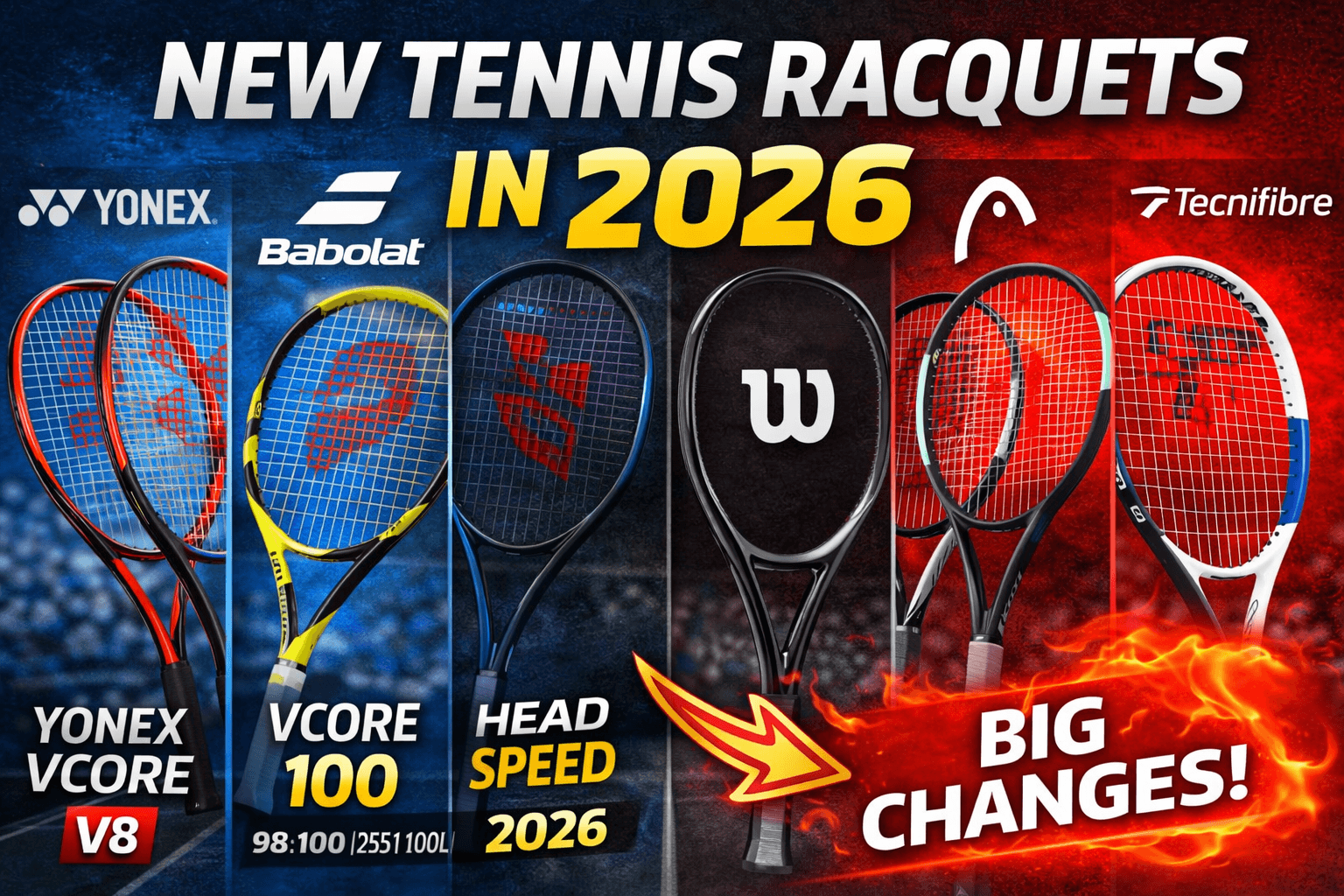
New Tennis Racquets Coming in 2026: Yonex, Head, Babolat & Wilson Breakdown
A real-player breakdown of confirmed and rumored tennis racquet releases coming in 2026: Yonex VCORE, Head Speed, Babolat Pure Aero, and Wilson updates.
Published January 5, 2026
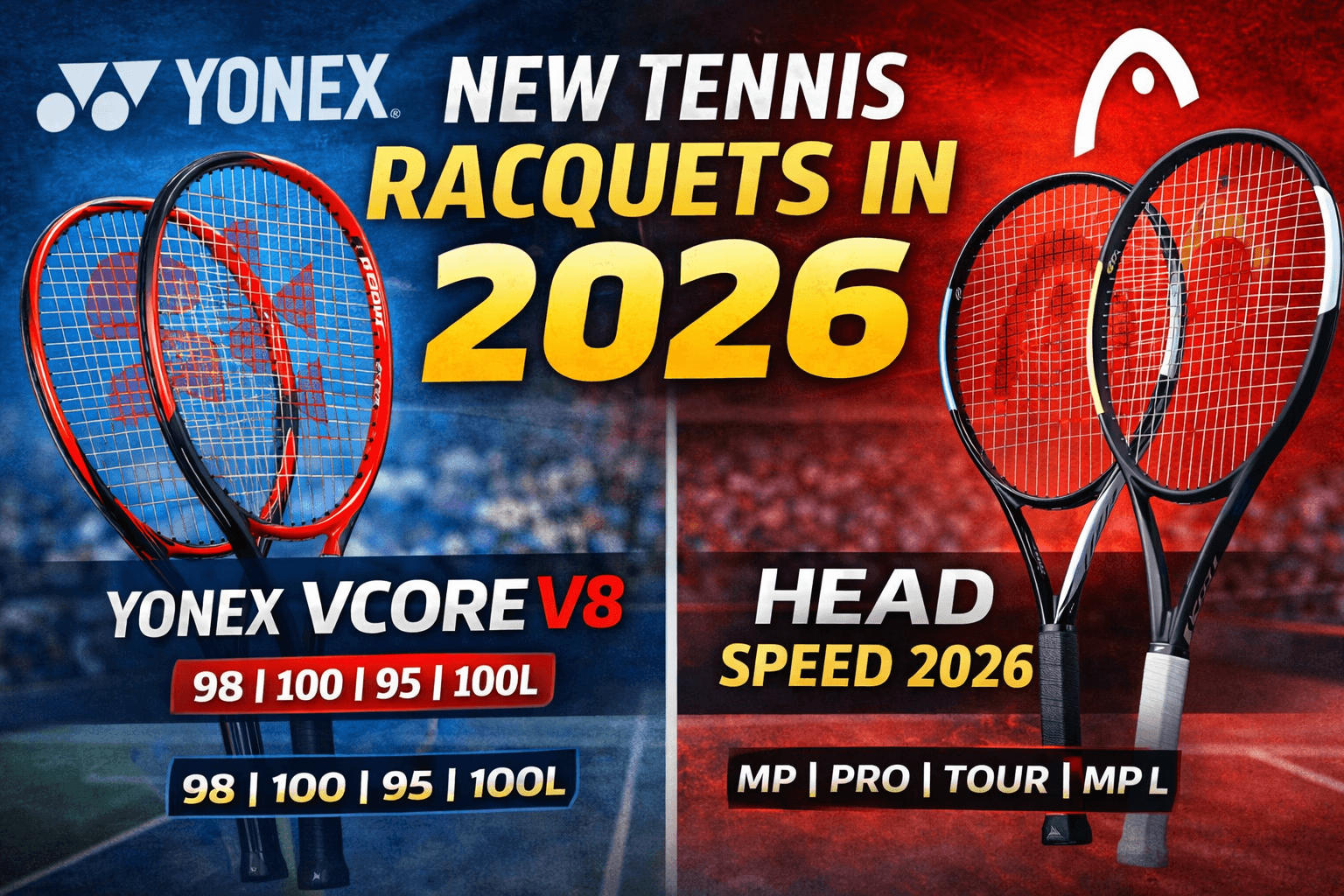
New Tennis Racquets Coming in 2026: Yonex VCORE V8 + Head Speed 2026
A real-player guide to the biggest 2026 racquet releases: Yonex VCORE V8 (95/98/100/100L) and Head Speed 2026 (MP/Pro/Tour/MP L).
Published January 5, 2026

Unveiling the Latest Tennis Racket Technology: A Comprehensive Guide
Sarah Mitchell, a seasoned tennis coach, explores the latest advancements in tennis racket technology. From smart rackets to the impact of new tech on player performance, she covers it all. Sarah also shares some maintenance and safety tips, along with her personal experiences. Whether you're an intermediate player or a newbie, you'll find great value in her insights.
Published October 25, 2025